
Showing 61–72 of 82 resultsSorted by latest



Showing 61–72 of 82 resultsSorted by latest
Technical & Clinical Guide
Selecting the Right Extraction Instruments
Successful, atraumatic exodontia relies on selecting instruments that match specific anatomical tooth structures and clinical presentations. ComDent extraction instruments are built to provide optimal fulcrum dynamics and tactile responsiveness:
| Instrument Subcategory | Design & Handle Variations | Primary Clinical Indication |
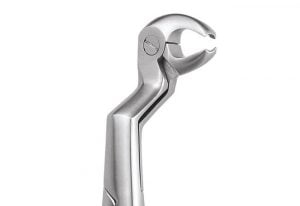
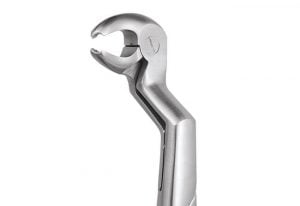
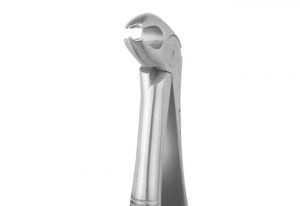
| English Pattern Forceps | Vertical/right-angle hinge, anatomical or serrated handles | Maxillary and mandibular molar, premolar, and anterior extractions with direct apical force vectoring. |
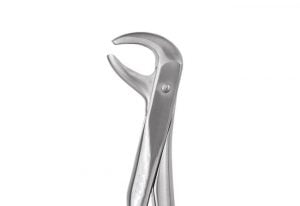
| American Pattern Forceps | Horizontal pin hinge, smooth or knurled handles | Universal coronal grip patterns (e.g., #150, #151, #23 Cowhorn) for controlled lateral and rotational movements. |
| Paediatric (Pedo) Forceps | Compact hinge design, hidden spring action | Primary dentition exodontia; sized specifically for smaller oral cavities and low-visibility pediatric procedures. |
| Standard & Anatomical Elevators | Straight (Coupland, Bein), Curved (Cryer), Triangular | Initial periodontal ligament disruption, socket expansion, and purchase-point elevation. |
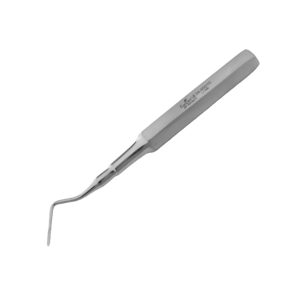
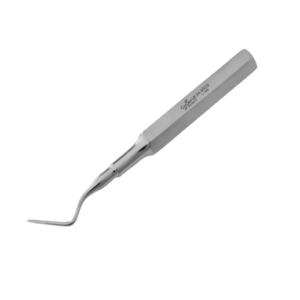
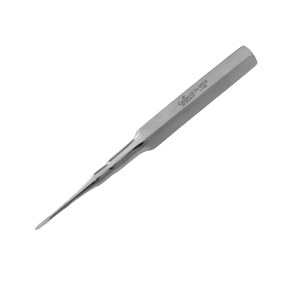
| Thin-Handle Elevators & Luxators | Slim, pen-style grip with razor-thin beaks | Precise interproximal access and delicate apical ligament severing with minimal lateral bone compression. |
| Syndesmotomes | Ultra-sharp, micro-curved/straight blades | Circumferential cutting of Sharpey’s fibres prior to forceps placement to prevent gingival tearing. |
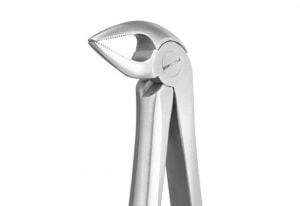
| Root Fragment Forceps | Micro-serrated, needle-thin beaks (Straight / 45° / 90°) | Locating and retrieving fractured root tips, retained apices, and small bony fragments from the socket fundus. |
Engineering & Grip Architecture
-
Cross-Serrated Beak Geometry: Unlike conventional smooth-beak forceps that can slip off tapered roots, ComDent forceps feature cross-hatched serrations that grip the root trunk securely along multiple friction vectors, significantly lowering the risk of crown fracture.
-
Handle Ergonomics:
-
Serrated Handles: Classic textured knurling provides positive traction even through fluid-slicked surgical gloves.
-
Anatomical Handles: Wide, finger-sculpted contours distribute compressive force across the palm, preventing localized pressure points during stubborn molar extractions.
-
-
Precision Box & Screw Joints: Tight-tolerance hinge joints eliminate lateral play while preserving smooth, uninhibited scissor travel under high load.
Decontamination & Maintenance Protocols (HTM 01-05 Compliance)
-
Pre-Soak & Cleaning: Rinse thoroughly with cool demineralised water immediately following surgery to prevent blood and bone fragments from hardening in cross-serrations or box hinges.
-
Ultrasonic & Washer-Disinfection: Process using validated neutral-pH enzymatic detergents. Open forceps handles fully during mechanical cycles to expose hinge pins and beaks to fluid flow.
-
Lubrication: Periodically apply a droplet of autoclavable, non-silicone, water-based surgical instrument lubricant to the hinge joint to maintain smooth movement and prevent metal-on-metal galling.
-
Sterilisation: Vacuum steam autoclave at 134°C. Ensure all instruments are thoroughly dry before packaging to prevent mineral staining or pitting.